
For millions of American families, the daily routine includes a familiar, nagging anxiety. If you are part of the “sandwich generation”—juggling your own kids, a career, and aging parents—you probably ask yourself the same question every single day: “Did Mom remember her blood pressure pill this morning?” or “Did Dad double-dose on his heart medication because he forgot he already took it?”
You are not alone. According to health statistics, more than half of older adults take four or more prescription medications daily. When a routine becomes that complex, the classic plastic grid pillbox simply doesn’t cut it anymore. It leaves too much room for human error, and let’s face it, it doesn’t talk back when a dose is missed.
That is where a dedicated medication reminder device comes into play. But with hundreds of smart gadgets, flashing pillboxes, and high-tech locking dispensers on the market, how do you pick the right one?
Choosing a medication reminder device doesn’t have to be overwhelming. By breaking it down into a few practical steps, you can find the perfect balance between high-tech safety and senior-friendly simplicity.
Step 1: Assess Cognitive and Physical Capabilities
Before looking at features or prices, you must evaluate the actual daily experience of the senior who will use the device.
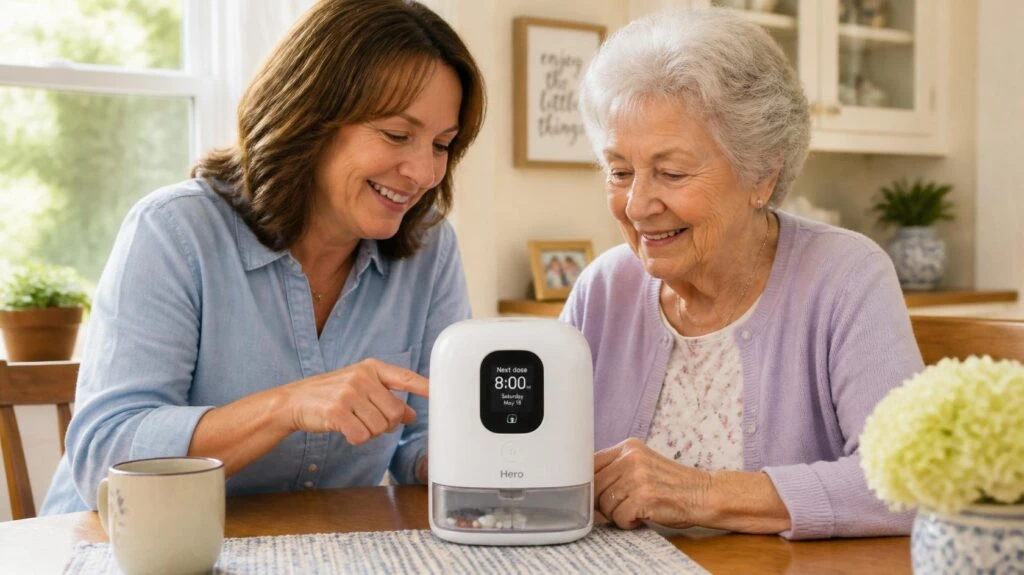
- For Independent Seniors with Mild Forgetfulness: If your loved one is generally active but just needs a gentle nudge, a simple digital alarm timer, a smart pillbox with LED flashes, or even a specialized senior smartwatch might be plenty.
- For Seniors with Manual Dexterity Issues (Arthritis): Avoid tiny buttons or stiff latch boxes. Look for devices with large, easy-to-press buttons, or automated carousels that dispense pills into an open cup without requiring twisting or pulling.
- For Seniors with Advanced Cognitive Decline or Dementia: Safety is the number one priority here. You need a fully automated, locked medication dispenser. This prevents “double-dosing” or trying to access the medication at the wrong time—a common and dangerous issue for adults dealing with memory loss.
Step 2: Understand the Types of Medication Reminder Devices
“Read our full review of the Best Automatic Pill Dispensers”
To make an informed choice, it helps to know what categories you are looking at. Devices generally fall into three tiers:
1. Smart Pill Organizers (App-Synced)
These look like traditional weekly planners but are packed with Bluetooth or Wi-Fi tech. They light up and beep when it’s time to take a pill. If the lid isn’t opened within a certain timeframe, the system sends a smartphone notification directly to the caregiver.
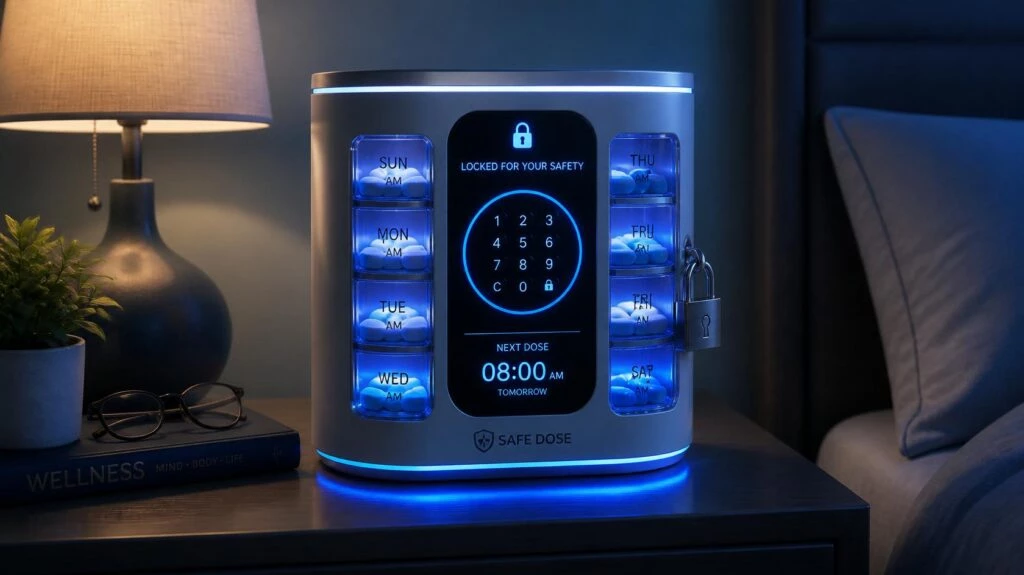
locked automatic pill dispenser
- Best for: Tech-friendly seniors and long-distance caregivers who want tracking without heavy, locked machinery.
2. Automatic Pill Dispensers (Internal Carousel)
These are circular appliances that sit on a counter. Inside, a wheel holds pre-sorted dosages. At the scheduled time, the wheel rotates, opens a tiny window, flashes lights, and emits a loud alarm. The alarm only stops when the senior tilts the machine or slides the window to take the pills.
- Best for: Complex prescription schedules (multiple doses per day) and preventing accidental over-medication.
3. Smart Medical Alert Systems with Medication Prompts
“Read our full review of the Best Automatic Pill Dispensers”
If your parents already use a medical alert button for fall detection, many modern hub systems offer voice-prompted reminders built right into the base station.
- Best for: All-in-one home safety setups.
Step 3: Crucial Features to Look For
When comparing models on Amazon or specialized medical tech sites, keep these non-negotiable features in mind:

- Battery Backup: Power outages happen. Ensure the device has a reliable backup battery system so it doesn’t reset or fail during a blackout.
- Alert Intensity: Is the alarm loud enough for someone with age-related hearing loss? Does it include a visual cue, like a flashing bright light, for visual reinforcement?
- Lock and Key Security: If dementia is a factor, an open tray is a hazard. A secure locking mechanism ensures only the correct dose is accessible at the correct time.
- Caregiver Portals: The best peace of mind comes from cloud connectivity. Look for devices that offer a mobile app or a dashboard where you can check adherence logs remotely.
The Bottom Line on Peace of Mind
Investing in the right medication management tool isn’t about taking away a senior’s independence—it’s about protecting it. It allows older adults to age gracefully in place, in the comfort of their own homes, without feeling micromanaged by well-meaning family members.
Take a moment to talk with your loved one about their daily challenges. Finding a device that fits their routine can transform a stressful medical chore into a seamless, worry-free habit for the whole family
#choosing_a_medication_reminder_device
#best_pill_reminder_for_elderly
#smart_pill_organizer_guide
