
Taking medication on time is an important part of staying healthy, but remembering every dose isn’t always easy. Between multiple prescriptions, different schedules, and busy daily routines, even organized people can occasionally miss a medication.
best medication reminder devices
Medication reminder devices are designed to make this process simpler.
Rather than relying on memory alone, these devices provide reminders, organize medications, and in some cases even help caregivers monitor whether a scheduled dose has been taken.
If you’re wondering how these devices actually work, this guide explains the technology in plain language without unnecessary technical details.
What Is a Medication Reminder Device?
A medication reminder device is any tool that helps someone remember when to take medication.
Some devices simply provide an alarm, while others organize pills, unlock medication compartments, or connect with family members through mobile apps.
Their purpose is straightforward: help users build a consistent medication routine and reduce the chances of missed or incorrect doses.
The Basic Process
Although designs vary, most medication reminder devices follow the same basic sequence.
Step 1: Medication Is Prepared
Medication is placed into labeled compartments.
Depending on the device, compartments may be organized by:
- Day of the week
- Time of day
- Individual doses
Many people refill the device once a week, while caregivers may assist if needed.
Step 2: A Schedule Is Set
Next, reminder times are programmed.
Some devices use:
- Physical buttons
- Touchscreens
- Smartphone apps
Users can often schedule several reminders throughout the day if multiple medications are required.
Step 3: Reminder Notifications Begin
When the scheduled time arrives, the device alerts the user.
Common reminders include:
- Audible alarms
- Flashing lights
- Vibrations
- Voice prompts
Using more than one type of notification makes reminders easier to notice.
Step 4: Medication Is Taken
The user opens the correct compartment or receives the medication from an automatic dispenser.
Some advanced devices unlock only the correct compartment, helping reduce confusion.
Step 5: The Device Resets
Once the scheduled dose has been taken, the reminder automatically resets for the next medication time.
This process repeats every day with very little effort from the user.
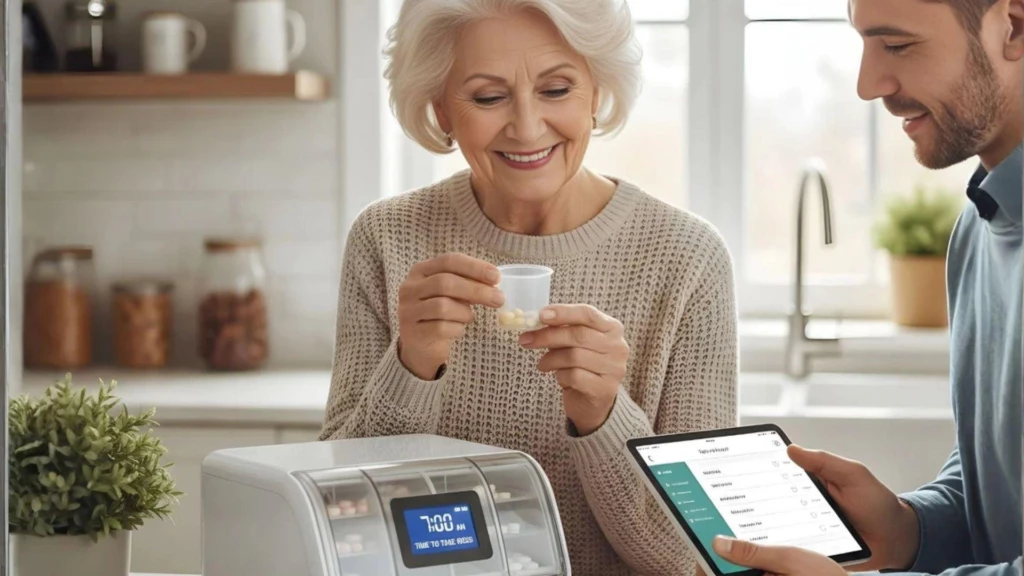
How Medication Reminder Devices Work
How Automatic Pill Dispensers Work
best pill dispensers for seniors
Automatic pill dispensers go one step further than basic reminder devices.
Instead of simply reminding users, they release only the correct medication at the scheduled time.
Most automatic dispensers work by:
- Storing medications in a rotating tray
- Turning to the correct compartment
- Unlocking one dose
- Keeping remaining medication secure
This design helps reduce accidental double dosing and makes medication routines easier to follow.
How Smart Medication Reminder Devices Work
Smart devices add another level of convenience.
Many connect to a mobile app through Bluetooth or Wi-Fi.
Depending on the model, they may:
- Record completed doses
- Send caregiver notifications
- Track medication history
- Allow remote schedule changes
These features can be especially useful for family members who live in a different city or state.
What Happens If a Dose Is Missed?
Different devices respond in different ways.
Some continue sounding an alarm until the medication is taken.
Others may:
- Repeat reminders after several minutes
- Display visual alerts
- Notify caregivers
- Record the missed dose in the device history
These features help users stay aware of their medication schedule without creating unnecessary stress.
Are Medication Reminder Devices Difficult to Use?
Most modern devices are designed with simplicity in mind.
Common senior-friendly features include:
- Large buttons
- Clear displays
- Easy-to-read labels
- Loud reminder sounds
- Straightforward setup
Many users become comfortable using a reminder device after only a few days.
Benefits Beyond Medication Reminders
Although the main purpose is remembering medications, many users notice additional benefits.
Medication reminder devices can help:
- Create consistent daily routines
- Reduce uncertainty about whether medication has already been taken
- Improve confidence when managing multiple prescriptions
- Support independent living
- Give family caregivers greater peace of mind
Sometimes, simply knowing that a reminder will appear at the right time can reduce daily stress.
Frequently Asked Questions
Do medication reminder devices automatically refill medications?
No. Users or caregivers still need to refill the device according to the prescribed schedule.
Do reminder devices require internet access?
Many basic reminder devices work without internet. Smart features such as caregiver notifications or cloud synchronization may require Wi-Fi or Bluetooth.
Are medication reminder devices difficult to learn?
Most are designed with older adults in mind and include simple controls, clear instructions, and large displays.
Can medication reminder devices replace medical advice?
No. These devices help users follow medication schedules but do not replace advice from healthcare professionals.
Final Thoughts
medication reminder apps for seniors
Medication reminder devices work by combining organization with timely reminders, helping users build dependable daily habits.
Whether the device uses a simple alarm, an automatic dispensing system, or smart connectivity, the goal remains the same: making medication management easier, safer, and less stressful.
Choosing a device that matches your daily routine can make staying on schedule feel much more manageable and help support greater independence over time.
